
If you’re searching for the best backyard chickens to start or expand your flock, you’ve likely come across dozens of breeds, each promising something different: more eggs, better temperament, or hardier constitutions. It can be overwhelming. But there’s one breed that quietly checks every box, and once you meet one, you’ll wonder why every backyard coop doesn’t have a Speckled Sussex scratching around in it.
The Speckled Sussex is an old English breed with a history that stretches back more than a century. It was refined in the county of Sussex in England, a region known for its variable weather and farming traditions. These birds were bred to be practical — good layers of brown eggs, substantial enough for the table, calm enough for the farmyard, and hardy enough to thrive in free-range conditions. Today, they are experiencing a well-deserved resurgence among backyard keepers who want more than just egg production from their flock.
In this comprehensive guide, we’ll explore everything that makes the Speckled Sussex a standout candidate for the title of Best Backyard Chickens — from their appearance and temperament to their egg-laying ability, hardiness, and how they fit into a family homestead.
A Brief History of the Speckled Sussex
The Sussex chicken is one of the oldest known domesticated breeds in England, with written records referencing them as far back as the Roman occupation of Britain. However, the breed as we know it today was standardized in the 19th century, primarily in the county of Sussex. The speckled variety became especially popular in England for its combination of utility and beauty.
By the early 1900s, Speckled Sussex chickens made their way to North America and were admitted to the American Poultry Association’s Standard of Perfection in 1914. Over the decades, they became a staple of small farms and homesteads. Then, like many heritage breeds, they fell out of favor as industrial agriculture shifted toward high-production hybrids.Best Backyard Chickens
Today, the Speckled Sussex is listed on the Livestock Conservancy’s watch list, which means efforts are underway to preserve and promote this historic breed. For backyard keepers, choosing a Speckled Sussex is not only a practical decision; it’s also a contribution to preserving genetic diversity in poultry.
What Does a Speckled Sussex Look Like?
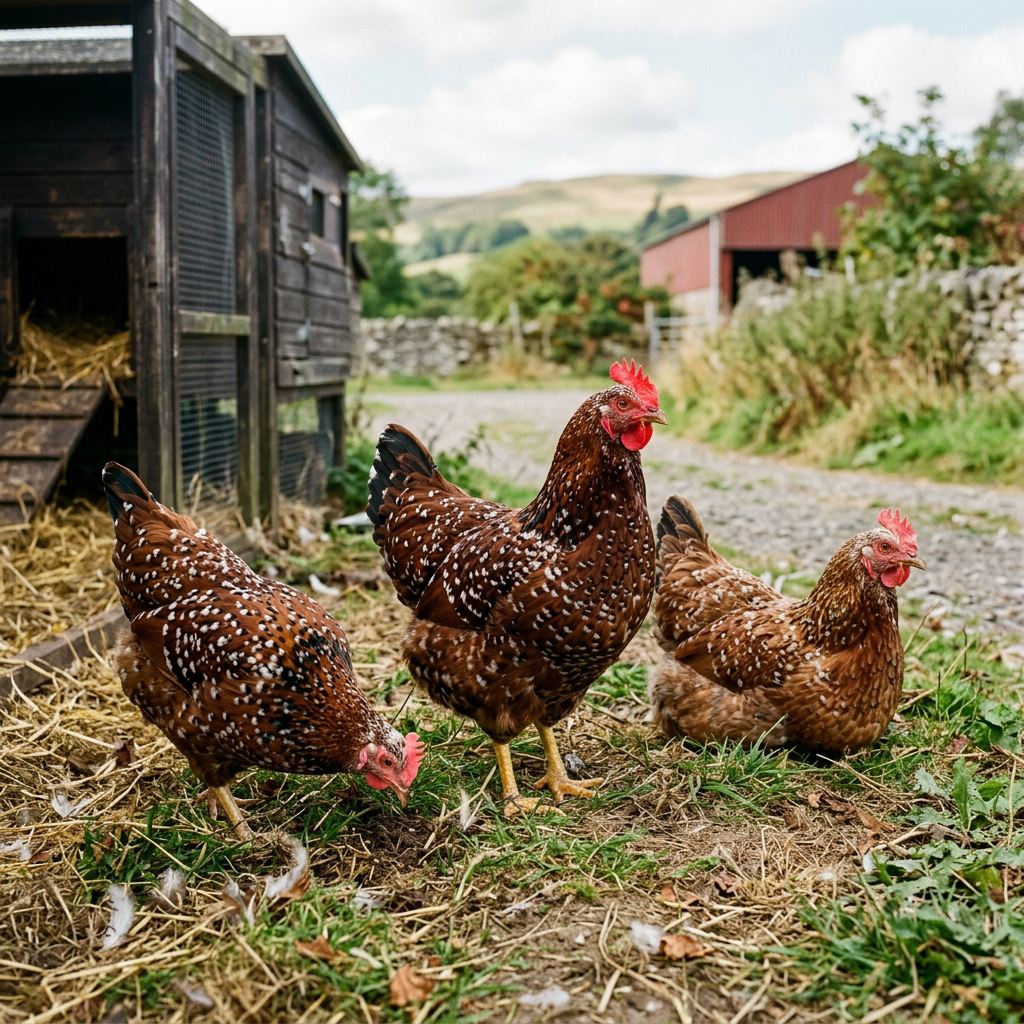
One look at a Speckled Sussex and you’ll understand why so many keepers fall in love with this breed. Their plumage is nothing short of spectacular: a rich mahogany-red base color, each feather tipped with a small white or cream-colored “speckle” that gives the bird a dappled, almost glittering appearance in the sunlight. It’s like owning a living piece of art in your backyard.
Each feather also has a subtle beetle-green sheen near the tip, adding depth and iridescence that changes as the bird moves. The overall effect is so beautiful that Speckled Sussex chickens are often featured in poultry shows and farm photography alike, and they hold their own against any ornamental breed.
Beyond their feathers, Speckled Sussex have a sturdy, rectangular body with a broad back and deep, full breast. They have white skin, red earlobes, and a single red comb with five distinct points. Their legs are clean (no feathers) and range from white to pinkish in color. Hens typically weigh 6 to 7 pounds, while roosters reach 8 to 9 pounds.
Temperament: The Friendliest Hen in the Coop
If you’re looking for the Best Backyard Chickens to have around children, guests, and other pets, the Speckled Sussex is hard to beat. These birds are renowned for their docile, curious, and friendly temperament. They are not flighty, skittish, or aggressive. In fact, many keepers describe them as “the golden retrievers of the chicken world.”
Speckled Sussex chickens are known to follow their owners around the yard, clucking softly as they investigate whatever you’re doing. They are quick to learn that you are the source of treats and will often come running when they see you approach. Many keepers report that their Speckled Sussex hens enjoy being picked up and held, making them an ideal choice for families with young children.
They are also a wonderfully chatty breed. Speckled Sussex make a range of soft, conversational sounds throughout the day, which adds a pleasant, calming soundtrack to any backyard. If you’re raising chickens for the first time, this breed is forgiving, easy to handle, and unlikely to cause frustration.
That said, they are not pushovers. Speckled Sussex hens hold their own in a mixed flock and are typically middle-of-the-pecking-order birds neither bullied nor bullies. Roosters, when kept, are known to be protective but not aggressive toward their human caretakers.
Egg Production: More Than Just a Pretty Face
A breed can have the most beautiful feathers and the sweetest personality, but if it doesn’t lay eggs, most Best Backyard Chicken keepers will think twice. Fortunately, the Speckled Sussex delivers on egg production in a big way.
A healthy Speckled Sussex hen will lay between 200 and 280 large brown eggs per year, depending on genetics, diet, and season. That’s roughly 4 to 6 eggs per week — comparable to many commercial hybrid layers. They typically begin laying at around 18 to 22 weeks of age, which is a reasonable timeline for a heritage breed.
One of the standout features of the Speckled Sussex is that they tend to lay well through the colder months. While many breeds significantly reduce or stop laying during winter due to reduced daylight, Speckled Sussex are known for continuing production, albeit at a slightly reduced rate, earning them a reputation as reliable winter layers.
If you want to learn more about their laying patterns and how to maximize egg output, check out this detailed guide on Speckled Sussex egg production. For those interested in the specifics of this breed as a dual-purpose bird, here’s a closer look at the Speckled Sussex as a dual-purpose chicken.
Dual Purpose: Eggs and Meat in One Package
The Speckled Sussex is classified as a dual-purpose breed, meaning it is equally suited for egg production and meat. This makes it an excellent choice for homesteaders and those aiming for a more self-sufficient lifestyle.
At butchering age (typically around 16 to 22 weeks), a Speckled Sussex cockerel will dress out to a respectable size with a good meat-to-bone ratio. The meat is flavorful, tender, and well-marbled far superior to the bland, bland breast meat of industrial Cornish Cross hybrids. For backyard keepers who prefer to process their own birds, the Speckled Sussex offers a humane and practical option.
Even if you never intend to process a bird, the dual-purpose nature of this breed means you get a larger, heartier bird that carries more body mass. They are substantial without being clumsy, and their size contributes to their cold hardiness as well.
Cold Hardiness and Adaptability of Best Backyard Chicken
If you live in a region with harsh winters, you need a breed that can handle the cold. The Speckled Sussex is one of the hardiest heritage breeds when it comes to cold weather. Their dense feathering provides excellent insulation, and their small-to-medium single comb is less prone to frostbite than the large combs of some Mediterranean breeds.
These birds originated in the south of England, where damp, cool weather is the norm, but they have proven themselves adaptable to a wide range of climates — from Canadian winters to hot, humid summers in the southern United States. They are not delicate birds by any stretch of the imagination.
For best results, however, provide them with a dry, draft-free coop in winter and plenty of shade and cool water in summer. They are not invincible, but they are remarkably resilient. Learn more about how to keep them in top condition year-round with this Speckled Sussex chicken care guide.
Foraging Ability and Free-Range Performance
One of the most satisfying things about keeping Speckled Sussex is watching them forage. Best Backyard Chickens,These birds are natural-born foragers with an instinct to scratch, peck, and explore. If you allow them to free-range, they will actively patrol your yard in search of insects, seeds, greens, and kitchen scraps.
They are excellent at controlling pests like ticks, grasshoppers, beetles, and slugs. Many keepers find that a flock of Speckled Sussex significantly reduces the insect population in their garden without needing chemical pesticides.
Their foraging also benefits you directly. Free-range Speckled Sussex produce eggs with deep orange yolks that are richer in omega-3 fatty acids and vitamins compared to eggs from confined birds. The yolk color alone is a visual testament to the quality of their diet.
If you’re considering a free-range system, here’s more information about Speckled Sussex free-range performance and how to set up a safe environment for your flock.
Health, Lifespan, and Common Concerns Best Backyard Chickens
Speckled Sussex are generally healthy, robust birds with a lifespan of 5 to 8 years, though many live longer with proper care. Their most common health issue is obesity — they love to eat and can easily become overweight if overfed or confined to a small run without enough exercise.
To keep them healthy, provide a balanced layer feed (16% protein is typical), offer plenty of greens and foraging opportunities, and limit treats like corn and scratch grains to no more than 10% of their diet. Ensure they always have access to clean, fresh water and a calcium source such as oyster shell for strong eggshells.
They are not particularly prone to any breed-specific diseases, but like all chickens, they benefit from regular health checks, clean housing, and protection from predators such as raccoons, hawks, foxes, and neighborhood dogs.
As a heritage breed, the Speckled Sussex also brings genetic diversity to your flock compared to commercial hybrid breeds. This often translates to stronger immune systems and better longevity.
Raising Speckled Sussex Chicks (Best Backyard Chickens)
Raising Speckled Sussex from chicks is a rewarding experience. They are active, curious, and alert from day one. Their chicks are easy to identify — they sport brown striping down their backs with clean white legs, making them distinct from many other breeds.
They grow quickly and are usually ready to move to the coop by 8 weeks, depending on your climate.
If you’re looking to add Speckled Sussex to your flock, you can find high-quality Speckled Sussex chicks from reputable breeders. For those interested in the full range of heritage options, explore more heritage chicken breeds to complement your flock.
How Speckled Sussex Compare to Other Popular Backyard Breeds
When evaluating the Best Backyard Chickens, it helps to compare breeds side by side. Here’s how the Speckled Sussex stacks up against other common choices:
vs. Rhode Island Red: Rhode Island Reds are excellent layers but can be more assertive and less friendly. Speckled Sussex are calmer and more suitable for families with children.
vs. Buff Orpington: Orpingtons are equally friendly and cold-hardy, but they lay fewer eggs (around 180–200 per year) compared to the Speckled Sussex. The Speckled Sussex is the more productive choice if eggs are a priority.
vs. Barred Plymouth Rock: Rocks are reliable layers and friendly birds, but they lack the stunning plumage of the Speckled Sussex. If aesthetics matter to you, the Speckled Sussex wins hands down.
vs. Australorp: Australorps are exceptional layers (up to 300 eggs per year), but they can be standoffish. Speckled Sussex offer more personality and beauty, with only a slight trade-off in egg numbers.
vs. Wyandotte: Wyandottes are gorgeous and hardy, but they tend to go broody more often, which reduces their yearly egg count. Speckled Sussex are also less prone to broodiness, making them more consistent producers.
For a closer look at everything this breed offers, read this comprehensive overview of Speckled Sussex chickens.
Where to Buy Speckled Sussex (Best Backyard Chickens)
The popularity of the Speckled Sussex has grown significantly in recent years, and they are now available from a variety of hatcheries and breeders. When purchasing, always choose a reputable source that prioritizes genetic diversity, health, and ethical breeding practices.
You can find Speckled Sussex chickens for sale in several forms: day-old chicks (straight run or sexed), started pullets, and mature breeding stock. Day-old chicks are the most affordable option but require brooder setup and patience. Started pullets are more expensive but reduce the wait time to your first egg.
If you need chicks or started birds, check availability and order Speckled Sussex chickens for sale and Speckled Sussex for sale from trusted suppliers. It’s also worth checking with local breeders, as locally adapted birds often perform better in your specific climate.
Pros and Cons at a Glance of Best Backyard Chickens
Pros:
- Beautiful, eye-catching plumage with unique speckled pattern
- Friendly, docile temperament — great for families with children
- Excellent egg production: 200–280 eggs per year
- Good cold hardiness and heat tolerance
- Reliable winter layers
- Exceptional foragers — perfect for free-range systems
- Dual-purpose: quality meat and eggs
- Heritage breed with historical significance
Cons:
- Prone to obesity if overfed or confined
- Can go broody (though less than Wyandottes or Silkies)
- Heritage status means they are less common than hybrid breeds
- Roosters can be noisy (like all roosters)
- Require predator protection like all free-range birds
Final Verdict: Is the Speckled Sussex the Best Backyard Chicken Breed?
Best Backyard Chickens. There is no single “best” breed for every situation, but the Speckled Sussex comes remarkably close to being the perfect all-around backyard chicken. It combines show-stopping beauty, a sweet and curious personality, reliable egg production, cold hardiness, and excellent foraging instincts into one beautiful package.
If you value a chicken that is as enjoyable to interact with as it is productive, and if you want a breed that contributes to preserving poultry heritage while supplying your kitchen with delicious eggs, the Speckled Sussex is an outstanding choice. Whether you’re a first-time chicken keeper or a seasoned homesteader, this breed deserves a place in your coop.
For more detailed information, visit Layers Farm for comprehensive care guides and resources to help your flock thrive.