
When it comes to building a sustainable, productive, and enjoyable backyard flock, few decisions matter more than choosing the right breed. Poultry enthusiasts and homesteaders alike spend hours poring over breed guides, hatchery catalogs, and online forums searching for that perfect bird, one that lays reliably, forages eagerly, interacts gently with children, and thrives without constant intervention. It is a tall order, and yet one breed rises to meet it with remarkable consistency. The Speckled Sussex has earned its place at the top of the Heritage Chicken Breeds list, and for good reason. This article explores exactly what makes this old English breed a standout among its peers and why it deserves serious consideration for your flock.
What Defines a Heritage Chicken Breed?
Before diving into the Speckled Sussex specifically, it helps to understand what the term “heritage” actually means. According to The Livestock Conservancy, a heritage chicken breed must meet specific criteria: it must be naturally mating (reproduce through natural mating rather than artificial insemination), it must have the genetic ability to live a long, vigorous life outdoors in a pasture-based system, and it must have a slow to moderate growth rate that reaches market weight around 16 weeks or later. Heritage breeds are the product of generations of careful selection by farmers who valued hardiness, foraging ability, and maternal instincts over industrial efficiency.
The Heritage Chicken Breeds category includes storied names like the Rhode Island Red, the Plymouth Rock, the Wyandotte, and the Orpington. Each of these breeds has its strengths. But the Speckled Sussex brings something rare to the table: an almost perfect balance of egg production, meat quality, temperament, and aesthetic beauty that few other breeds can match.
A Brief History of the Speckled Sussex
The Speckled Sussex originated in the county of Sussex in England, where it was developed in the 19th century, though its ancestors were recorded as far back as the time of the Roman occupation of Britain. These birds were prized for their excellent table qualities and their steady egg production through the winter months, a trait that was especially valuable in the days before artificial lighting in coops.
By the mid-1800s, the Sussex had been refined into several color varieties, with the speckled (or “speckled Sussex”) becoming the most beloved. The breed was imported to the United States in the early 20th century and was admitted to the American Standard of Perfection in 1914. Today, the Livestock Conservancy lists the Sussex as a “Watch” breed, meaning its conservation status warrants attention. This makes choosing the Speckled Sussex not just a good decision for your flock but also a contribution to preserving agricultural biodiversity.
Temperament: The Friendliest Bird in the Coop of Chicken Breeds
If you ask experienced chicken keepers why they love the Speckled Sussex, the first word out of their mouth is almost always “friendly.” This is a bird that genuinely enjoys human interaction. Speckled Sussex chickens are curious, chatty, and docile; they will follow you around the yard, hop onto your lap when you sit down, and eagerly investigate anything new in their environment. They are particularly well-suited to families with children because they tolerate handling well and do not startle easily.
This temperament is not just a nice bonus; it is a practical advantage. Calm birds are easier to manage during health checks, easier to handle for egg collection, and far less likely to develop stress-related behavioral issues. For beginners, the Speckled Sussex is widely recommended as one of the best starter breeds precisely because it combines hardiness with a forgiving, gentle personality.
For more on how these birds interact with their environment and their keepers, you can explore Speckled Sussex free-range habits and temperament.
Egg Production: Reliable Layers Through the Seasons
One of the most frequently cited reasons the Speckled Sussex dominates Heritage Chicken Breeds lists is its dependable egg production. A healthy Speckled Sussex hen will lay approximately 200 to 250 large, light brown to tinted eggs per year. While this may not match the year-round output of a production hybrid like the Red Star or Golden Comet, it comes with an important caveat: the Speckled Sussex continues laying well through the colder months when many other breeds slow down or stop entirely.
This winter hardiness is a genetic inheritance from the breed’s origins in the cool, damp climate of southern England. The birds have a dense, well-feathered body that insulates them against cold, and their combs and wattles are moderately sized less prone to frostbite than some other large-combed breeds.
For detailed numbers and expectations, you can read more about Speckled Sussex egg production patterns and what to expect from your flock.
A True Dual-Purpose Heritage Chicken Breeds
The Speckled Sussex is one of the finest examples of a dual-purpose heritage breed. “Dual purpose” means the breed performs well both as an egg layer and as a meat bird — a distinction that was once the standard for all farm flocks but has become increasingly rare in the age of specialized hybrids.
A mature Speckled Sussex rooster weighs in at around 9 pounds, while hens average 7 pounds. Because heritage breeds grow more slowly than commercial Cornish Cross hybrids, their meat develops a richer texture and more complex flavor. For the homesteader who wants to maintain a self-sufficient flock, this dual-purpose capability is invaluable.
To learn more about the breed’s physical characteristics and growth, check out Speckled Sussex chicken size information.
Foraging Ability and Free-Range Excellence for Heritage Chicken Breeds
Heritage breeds are defined in part by their ability to thrive on pasture, and the Speckled Sussex excels in this regard. These birds are active, alert, and enthusiastic foragers. They will spend hours scratching through leaf litter, hunting insects, and grazing on tender greens, which not only reduces your feed costs but also produces eggs with deeper orange yolks and higher omega-3 content.
Their foraging ability also makes them excellent pest controllers in gardens and orchards. The Speckled Sussex is alert to overhead predators and is quick to seek cover, making it more likely to survive in free-range setups than some more oblivious heavy breeds. Their medium size and agile movement allow them to cover ground efficiently without exhausting themselves.
For guidance on raising these birds outdoors, the Speckled Sussex chicken care guide offers practical tips on shelter, nutrition, and health management.
Hardiness and Health of Heritage Chicken Breeds
One of the most compelling reasons to add the Speckled Sussex to your flock is its robust constitution. . Only the strongest, most disease-resistant birds survived to reproduce. That genetic legacy remains today.
Speckled Sussex chickens tolerate both heat and cold well, adapt to a wide range of climates, and have few breed-specific health problems. Their feathers are tight and glossy, providing excellent waterproofing and insulation. They are not prone to brooding excessively (though some hens do go broody and make excellent mothers), and they generally have strong immune systems that help them resist common poultry ailments.
If you’re looking to add these hardy birds to your homestead, you can find Speckled Sussex chickens for sale through reputable breeders.
Appearance: A Living Work of Art for Heritage Chicken Breeds
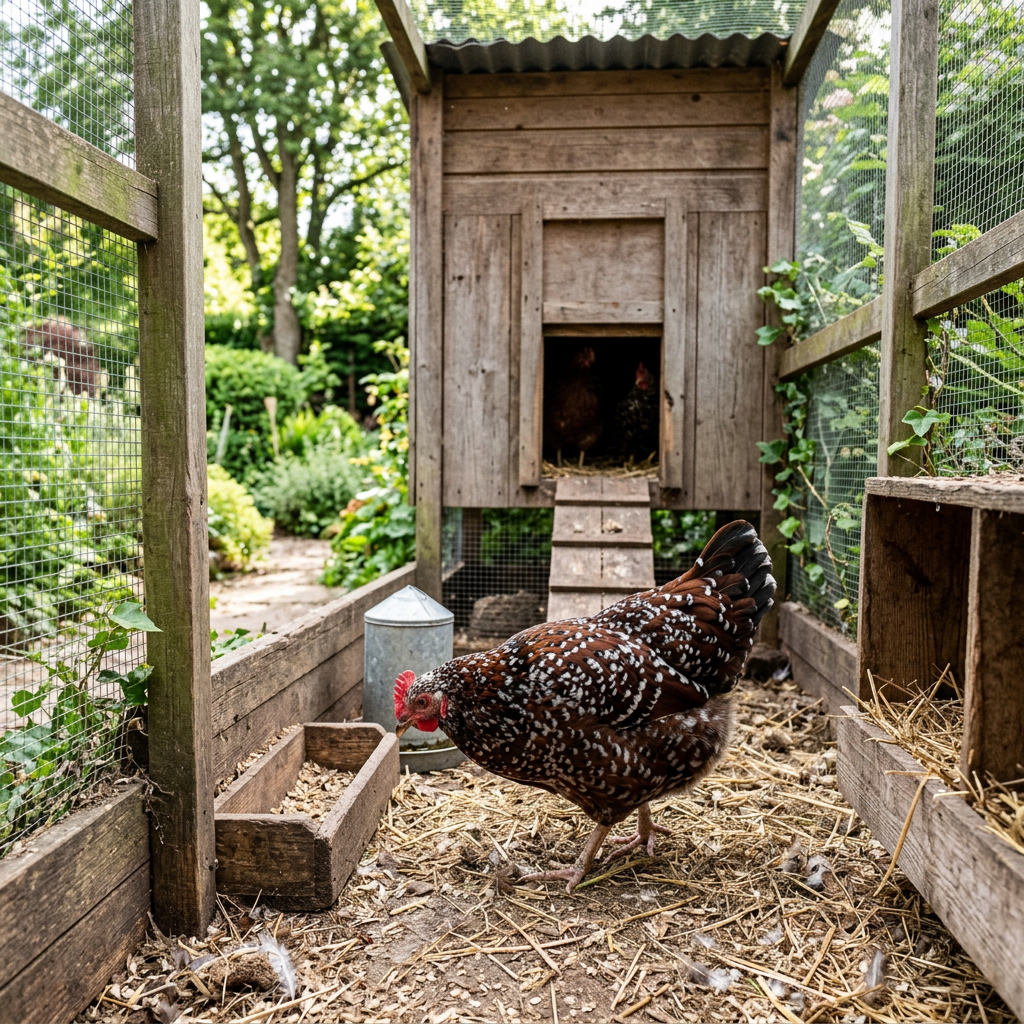
There is no denying the beauty of a well-kept Speckled Sussex. Their plumage is a rich, mahogany base flecked with tiny white and black “speckles” that create a striking, infinitely varied pattern. The comb is single and bright red, the legs are clean and white or pinkish, and the overall impression is one of robust vitality.
As the birds age, the speckling becomes more pronounced and the colors deepen, which means your Speckled Sussex only becomes more beautiful with time. They are one of the few breeds that actually improve aesthetically as they mature.
Why Speckled Sussex Deserves the Top Spot
So, what puts the Speckled Sussex ahead of other excellent breeds on the Heritage Chicken Breeds list? It is the rare combination of qualities that matters to real-world keepers. The Rhode Island Red is a fantastic layer but can be pushy with other birds. The Buff Orpington is wonderfully docile but can be lazy in hot weather. The Wyandotte is cold-hardy but sometimes overly broody. The Speckled Sussex, by contrast, delivers consistently across every category without a significant weakness.
It is gentle but not timid, productive but not frantic, beautiful but not fragile, hardy but not wild. For the keeper who wants one breed that can do it all — eggs, meat, pest control, companionship, and aesthetic pleasure — the Speckled Sussex is the answer.
To explore more about this breed’s dual-purpose qualities, visit Speckled Sussex dual-purpose chicken information. And if you are ready to start your flock, you can find Speckled Sussex for sale from trusted sources.
Tips for Getting Started with Speckled Sussex
If this article has convinced you to give the Speckled Sussex a try, here are a few practical tips to set you up for success:
- Source from reputable hatcheries. Not all Speckled Sussex lines are created equal. Look for breeders who prioritize health, temperament, and adherence to the breed standard. You can begin your search at Layers Farm for quality chicks.
- Provide adequate space. Heritage breeds need room to express their natural behaviors. Plan for at least 4 square feet per bird inside the coop and 10 square feet per bird in the run or pasture.
- Feed a balanced diet. While they are excellent foragers, your Speckled Sussex still need a complete layer feed with 16 percent protein, supplemented with calcium for strong eggshells and grit for digestion.
- Protect from predators. Their friendly nature can make them vulnerable. Secure your coop with hardware cloth rather than chicken wire, and consider a livestock guardian dog or electric fencing for free-range setups.
- Handle them early. Speckled Sussex chicks are naturally curious and will bond with you quickly if handled gently from day one. For more on raising them from the start, explore Speckled Sussex chickens resources.
Conclusion on Heritage Chicken Breeds
The Heritage Chicken Breeds list is full of worthy candidates, each with its own devoted following. But few breeds can match the all-around excellence of the Speckled Sussex. It is a bird that honors its heritage while delivering real, practical value to the modern homesteader. Whether you are raising your first chicks or expanding an established flock, the Speckled Sussex offers reliability, beauty, and companionship in equal measure.
By choosing the Speckled Sussex, you are not just adding chickens to your life — you are preserving a piece of agricultural history, supporting genetic diversity, and inviting one of the friendliest, most productive birds in the poultry world into your backyard. That is why, year after year, the Speckled Sussex leads the best Heritage Chicken Breeds list, and why it will likely remain there for generations to come.
External resources for further reading: For more on heritage breed conservation, visit The Livestock Conservancy to learn about breed preservation efforts. The American Poultry Association also offers breed standards and show information for heritage enthusiasts.