
The Speckled Sussex chicken size is one of the most commonly asked questions among backyard poultry enthusiasts considering this magnificent heritage breed. Whether you are a first-time chicken keeper or an experienced homesteader expanding your flock, understanding how big Speckled Sussex chickens grow, how fast they develop, and what to expect at each stage of their growth journey is essential for proper care and planning. This comprehensive guide provides everything you need to know about the Speckled Sussex chicken size, weight expectations, and a detailed growth chart to help you raise healthy, thriving birds.
Introduction to the Speckled Sussex Chicken
The Speckled Sussex is one of the oldest known chicken breeds, with a history that traces back to southeastern England, specifically the county of Sussex, as far back as the time of the Roman occupation of Britain around 43 AD. Officially recognized as a distinct breed in 1914 by the American Poultry Association, the Speckled Sussex has long been treasured as a dual-purpose breed, valued equally for its excellent table qualities and reliable egg production.
What sets the Speckled Sussex apart visually is its stunning plumage: a rich mahogany-brown base color with each feather tipped in white, creating a beautiful speckled or “spangled” appearance that gives the breed its name. Beyond their good looks, these birds are celebrated for their docile temperament, cold hardiness, and remarkable foraging ability. But before adding them to your flock, understanding the Speckled Sussex chicken size is crucial for planning coop space, feeder capacity, and overall flock management.
If you are looking to start with young birds, you can find high-quality Speckled Sussex chicks available for your flock.
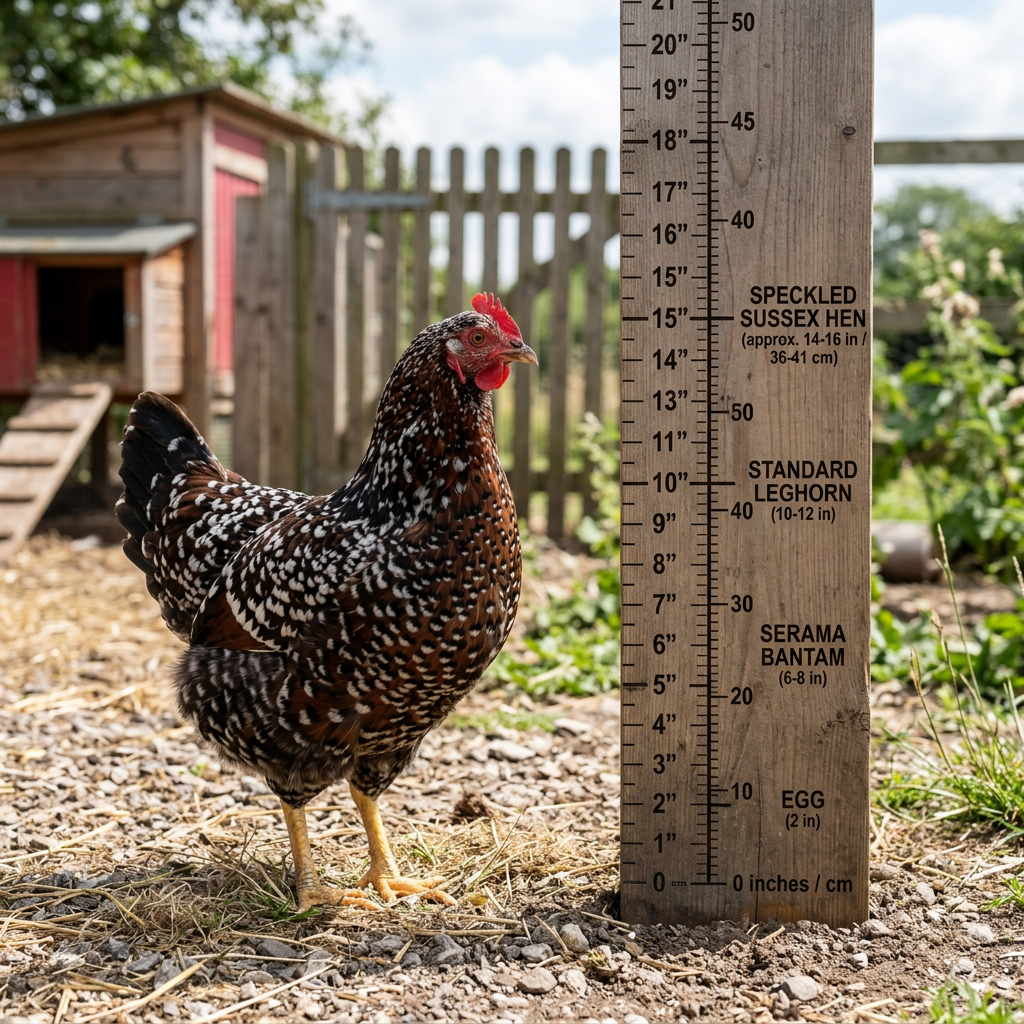
Speckled Sussex Chicken Size: Standard Weights and Dimensions
The Speckled Sussex chicken size is classified as a large, heavy breed. These birds have broad, deep bodies with a long, rectangular shape that contributes to their substantial weight. When discussing the Speckled Sussex chicken size, it is important to distinguish between standard weights established by poultry organizations and what backyard keepers typically experience.
Mature Standard Weights
According to the American Poultry Association’s Standard of Perfection and the British Poultry Standards, the official Speckled Sussex chicken size and weight expectations are as follows:
| Class | Weight |
|---|---|
| Cock (Mature Male, 1+ year) | 9 pounds (4.1 kg) |
| Hen (Mature Female, 1+ year) | 7 pounds (3.2 kg) |
| Cockerel (Young Male, under 1 year) | 7.5 pounds (3.4 kg) |
| Pullet (Young Female, under 1 year) | 6 pounds (2.7 kg) |
Most backyard keepers report that their Speckled Sussex chickens fall within the range of 8 to 9 pounds for roosters and 6 to 7 pounds for hens. Some well-fed birds from productive strains may even reach slightly higher weights. The Speckled Sussex chicken size makes it one of the heavier heritage breeds, comparable to the Orpington and Wyandotte in body mass.
For a closer look at mature roosters, visit our detailed page on the Speckled Sussex rooster.
Bantam Speckled Sussex Size
For those with limited space, bantam Speckled Sussex are also available. Bantam roosters typically weigh around 36 ounces (about 2.25 pounds), while bantam hens weigh approximately 32 ounces (about 2 pounds).
Speckled Sussex Chicken Growth Chart: From Chick to Adult
Understanding the growth trajectory of your Speckled Sussex chickens helps you monitor their health, adjust feeding programs, and anticipate when they will reach maturity. Below is a detailed Speckled Sussex chicken size growth chart covering the key developmental stages from hatching to full maturity.
Week-by-Week Growth Guide
Week 1 (0–7 days):
At hatch, Speckled Sussex chicks weigh approximately 1.2 to 1.5 ounces (35–42 grams). They are covered in soft down with characteristic chipmunk-like striping on their backs. During this first week, they should gain weight steadily as they learn to eat and drink. A healthy chick will double its hatch weight within the first 7 days.
Week 2 (8–14 days):
By two weeks of age, chicks typically weigh between 3 and 4 ounces (85–115 grams). Wing feathers begin to emerge, and the chicks become more active and mobile. Their appetite increases noticeably.
Week 3 (15–21 days):
At three weeks, Speckled Sussex chicks weigh approximately 5 to 7 ounces (140–200 grams). True feathers start replacing down, particularly on the wings and tail. This is a critical period for growth, and a high-quality starter feed with 18–20% protein is essential.
Week 4 (22–28 days):
Four-week-old chicks weigh around 8 to 10 ounces (225–285 grams). The speckled feather pattern begins to become visible as more adult feathers come in. They are fully feathered enough to regulate their body temperature better but still require a heat source if ambient temperatures are cool.
Week 6 (35–42 days):
At six weeks, Speckled Sussex chicks weigh approximately 14 to 18 ounces (400–510 grams). They are mostly feathered and may be ready to transition from the brooder to the coop if temperatures are mild. Their comb and wattles begin to develop and take on a pinkish color.
Week 8 (56 days):
Eight-week-old birds weigh about 1.5 to 2 pounds (680–910 grams). At this stage, cockerels and pullets begin to show subtle differences in comb size and body shape. The plumage is nearly complete, displaying the beautiful speckled patterning.
Week 12 (84 days):
By twelve weeks, young Speckled Sussex weigh approximately 2.5 to 3.5 pounds (1.1–1.6 kg). They are essentially in their juvenile plumage and have grown significantly in body frame. This is a good time to switch from starter/grower feed to a finisher or layer feed depending on your goals.
Week 16 (112 days):
Sixteen-week-old birds weigh around 3.5 to 5 pounds (1.6–2.3 kg). Pullets are nearing laying age, and cockerels are developing their adult combs and wattles. The Speckled Sussex chicken size at this stage is approximately 60–70% of their final adult weight.
Week 20 (140 days):
At twenty weeks, Speckled Sussex chickens weigh approximately 4.5 to 6 pounds (2–2.7 kg) for pullets and 5 to 7 pounds (2.3–3.2 kg) for cockerels. Pullets may begin laying their first eggs around this time, although some Speckled Sussex hens take a bit longer, up to 24–26 weeks. This is the point of sexual maturity.
Week 24–26 (168–182 days):
By six months, most Speckled Sussex chickens have reached 80–90% of their adult weight. Pullets weigh 5.5 to 6.5 pounds, and cockerels weigh 6.5 to 8 pounds. The first eggs are typically small but will increase in size as the hen matures.
1 Year and Beyond (Full Maturity):
At one year of age, Speckled Sussex chickens reach their full adult weight. Hens stabilize at 6–7 pounds, and roosters reach 8–9 pounds. Their bodies fill out, becoming broad and deep-chested. The plumage is fully developed with rich, iridescent speckling that becomes more pronounced with each molt.
For comprehensive information on raising these beautiful birds, check out our complete Speckled Sussex chickens guide.
Factors That Influence Speckled Sussex Chicken Size
Several factors can affect the Speckled Sussex chicken size beyond genetics. Understanding these variables will help you ensure your birds reach their full growth potential.
Nutrition and Feed Quality
The most significant factor influencing growth is nutrition. Chicks require a starter feed with 18–20% protein for the first 8 weeks. From 8 to 18 weeks, a grower feed with 16–18% protein supports steady development. After 18 weeks, laying hens benefit from a layer feed with 16% protein and adequate calcium (3.5–4%) for eggshell production. Roosters can continue on a grower or maintenance feed.
Genetics and Bloodline
Not all Speckled Sussex are created equal. Hatchery strains often produce birds at the lower end of the weight spectrum, while exhibition-quality birds from breeders selecting for size may reach the upper limits of the standard. If you prioritize large Speckled Sussex chicken size, source your birds from breeders who emphasize weight in their breeding programs. You can find quality options at Speckled Sussex for sale.
Free-Range vs. Confinement
Birds allowed to free-range tend to develop stronger muscle tone and may weigh slightly more than confined birds due to increased exercise and access to natural forage. However, they also burn more calories roaming, so the difference is usually modest. A well-balanced diet remains the priority regardless of housing system.
Health and Parasite Management
Internal and external parasites can stunt growth and prevent birds from reaching their expected Speckled Sussex chicken size. Regular health checks, deworming protocols, and clean living conditions are essential for optimal development.
Season and Environment
Chicks hatched in warmer months tend to grow faster because they spend more time outdoors foraging and exercising. Cold temperatures can slow growth as birds divert energy to maintaining body heat. Proper brooder temperatures (95°F in week one, decreasing by 5°F each week) are critical for early growth.
Speckled Sussex Egg Production
While this guide focuses on size and growth, it is worth noting that the Speckled Sussex chicken size correlates positively with its egg-laying capacity. Larger, well-developed hens typically lay more consistently and produce larger eggs. Speckled Sussex hens are excellent layers of large, light brown eggs, producing 200 to 250 eggs per year, approximately 4 to 5 eggs per week. They are known for laying well even through the cold winter months, a trait not shared by all heritage breeds.
For detailed information on egg production expectations, visit our page on Speckled Sussex egg production.
How to Monitor Your Speckled Sussex Chicken’s Growth
Tracking your birds’ development is straightforward with a few simple practices:
- Use a kitchen scale — Weigh your chicks weekly for the first 8 weeks, then monthly until maturity. Record the weights in a notebook or spreadsheet.
- Compare against the growth chart — Use the Speckled Sussex chicken size growth chart in this article to see if your birds are on track. Slight variations are normal, but significant deviations may indicate health or nutrition issues.
- Observe body condition — A healthy Speckled Sussex should have a well-fleshed breastbone with a thin layer of fat, bright eyes, clean feathers, and an active demeanor.
- Check feather development — Feather growth should proceed predictably. Delayed feathering can indicate stress, illness, or nutritional deficiencies.
- Monitor feed consumption — Chicks eat approximately 1–2 ounces of feed per day per bird, increasing as they grow. Sudden drops in appetite warrant investigation.
Housing Considerations Based on Speckled Sussex Chicken Size
Because the Speckled Sussex chicken size places them in the large breed category, your coop and run must accommodate their dimensions appropriately:
- Coop space: Provide a minimum of 4 square feet per bird inside the coop. Given their large size, 5 square feet per bird is even better.
- Run space: Aim for at least 10 square feet per bird in the run. Speckled Sussex are active foragers and benefit from ample space to roam.
- Roosting bars: Provide 8–12 inches of roosting space per bird. Bars should be placed 18–24 inches off the ground with 2×2 or 2×3 inch dimensions for comfortable gripping.
- Nesting boxes: One box per 3–4 hens is adequate. Boxes should be at least 12×12×12 inches to accommodate the larger Speckled Sussex chicken size.
- Pop door height: Ensure pop doors are at least 12 inches tall and 10 inches wide for easy passage.
Proper care and housing are essential for healthy growth. For more detailed guidance, read our comprehensive Speckled Sussex chicken care article.
Speckled Sussex Rooster: Size and Characteristics
The Speckled Sussex rooster is an impressive bird. With a mature weight of 8 to 9 pounds and a height of approximately 22 to 26 inches, he cuts a striking figure in any flock. His comb is single and upright with five distinct points, and his wattles are well-developed and bright red. The hackle feathers on his neck are long and pointed, and his tail features prominent sickle feathers with a beautiful greenish-black iridescence.
Temperament-wise, Speckled Sussex roosters are generally calm and gentlemanly compared to many other breeds. They are protective of their hens but rarely aggressive toward humans, making them suitable for family flocks. However, individual temperaments vary, and proper handling from a young age is recommended.
To learn more about these magnificent males, check out our dedicated page on the Speckled Sussex rooster.
Are Speckled Sussex Chickens Good for Meat?
Yes. The Speckled Sussex chicken size makes it an excellent dual-purpose breed. With roosters dressing out at 6 to 7 pounds and hens at 4.5 to 5.5 pounds, they provide a substantial table bird. The meat is flavorful, tender, and well-marbled, a trait inherited from their history as a premier table breed in 19th and early 20th century England. Unlike some modern commercial meat breeds that grow too fast for their skeletal systems, Speckled Sussexes grow at a natural, healthy rate while still reaching an impressive harvest weight.
Common Questions About Speckled Sussex Chicken Size
Are Speckled Sussex slow growers?
Some keepers find Speckled Sussex to be slightly slower to mature compared to modern hybrid breeds. They reach full Speckled Sussex chicken size and weight at around 20–24 weeks for pullets and slightly longer for cockerels. However, this slow-and-steady growth contributes to their robust health and longevity.
How big do Speckled Sussex bantams get?
Bantam Speckled Sussex roosters weigh about 36 ounces, and hens weigh about 32 ounces. They maintain all the characteristics of their standard-sized counterparts in a smaller package.
Do Speckled Sussex chickens get bigger with age?
Hens typically reach their full adult weight by 12–14 months. Roosters may continue to fill out slightly through their second year. After that, weight remains relatively stable, though older birds may gain fat if overfed.
What is the smallest Speckled Sussex chicken size?
A healthy, well-fed pullet at the lower end of the standard will weigh around 6 pounds at maturity. Anything significantly smaller may indicate poor genetics, inadequate nutrition, or underlying health issues.
Conclusion on Speckled Sussex Chicken Size
The Speckled Sussex chicken size with roosters reaching 8–9 pounds and hens 6–7 pounds, makes this breed a substantial and rewarding addition to any backyard flock. Their steady growth rate, coupled with their beautiful speckled plumage, friendly disposition, and reliable egg production, explains why they remain one of the most beloved heritage breeds worldwide.
Whether you are raising them for eggs, meat, exhibition, or simply as charming backyard companions, understanding the size and growth expectations covered in this guide will help you provide the best possible care. From the first downy chick to the fully feathered adult, watching a Speckled Sussex develop is a deeply satisfying experience for any poultry keeper.
Ready to add these magnificent birds to your flock? Browse our selection of Speckled Sussex chickens for sale and find the perfect additions to your homestead. We also offer quality Sussex roosters for sale if you are looking to introduce a dependable flock protector.
External Reference: For more information on the history and breed standards of the Sussex chicken, visit The Livestock Conservancy’s Sussex Chicken page.