
If you’re looking for a backyard chicken breed that combines beauty, productivity, and an easy-going temperament, you’ve found it. Speckled Sussex chicken care is remarkably straightforward, making this heritage breed a favorite among beginners and experienced poultry keepers alike. With their striking reddish-brown plumage dusted with white speckles, gentle personalities, and reliable egg production, Speckled Sussex chickens bring both charm and utility to any flock.
This complete year-management guide covers everything you need to know from brooding day-old chicks to keeping your hens healthy and productive through every season. Whether you’re just starting your journey or looking to refine your care routine, you’ll find practical, season-by-season advice right here.
A Brief History of the Speckled Sussex chicken
Before we dive into care, it helps to understand where this breed comes from. The Speckled Sussex originated in Sussex County, England, over a century ago. Historically prized as a dual-purpose farm bird, they were bred for both meat and eggs, and they excelled at both. The breed was refined and standardized through the 1800s and made its way to the United States, where it was admitted to the American Poultry Association’s Standard of Perfection in 1914.
Today, Speckled Sussex chickens are listed on the Livestock Conservancy’s priority list, which means conservation-minded keepers play an important role in preserving this historic breed. When you raise them, you’re not just gaining a wonderful backyard companion; you’re also helping maintain genetic diversity in poultry.
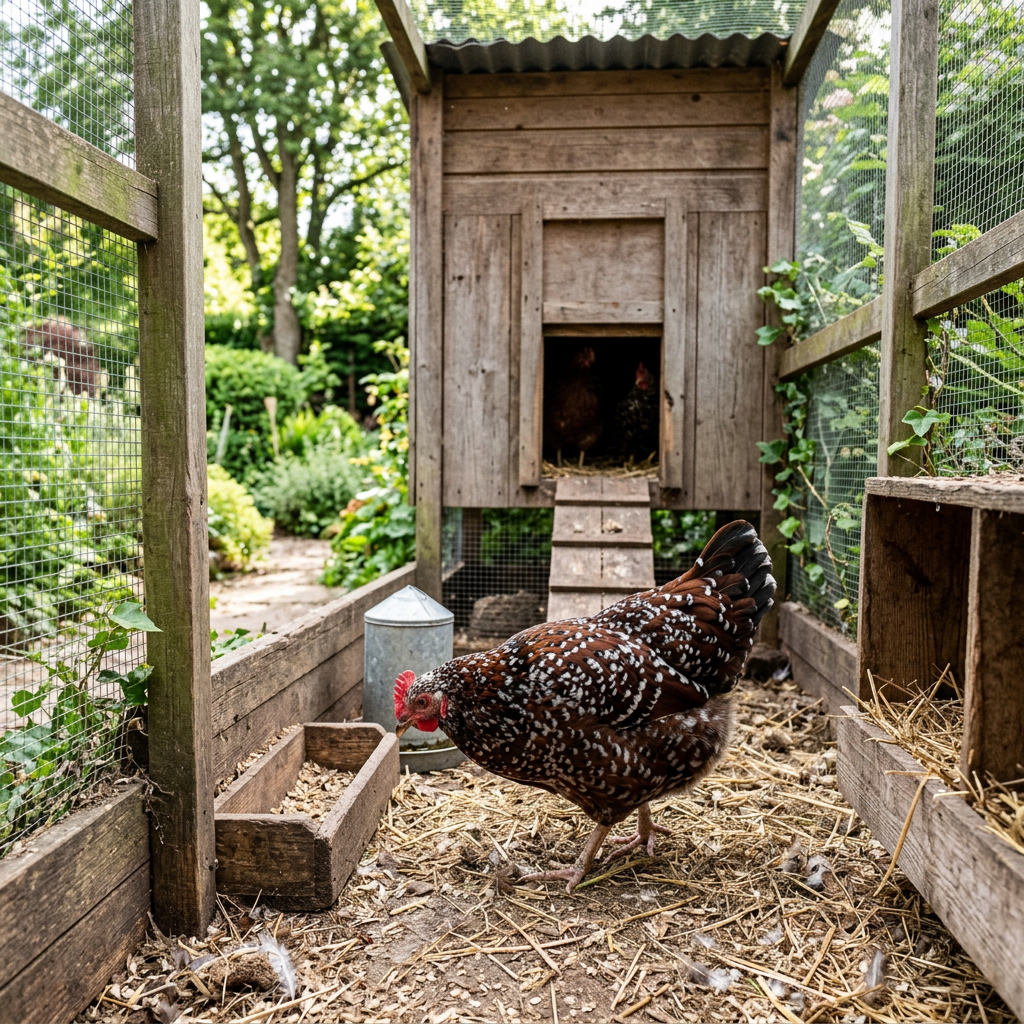
Breed Characteristics at a Glance of Speckled Sussex chicken
- Purpose: Dual-purpose (eggs and meat)
- Egg Color: Light brown to pinkish-brown
- Egg Production: 4–5 eggs per week (approximately 200–250 per year)
- Weight: Hen: 6–7 lbs, Rooster: 8–9 lbs
- Temperament: Docile, friendly, curious
- Cold Hardiness: Excellent
- Heat Tolerance: Moderate (needs shade and ventilation)
- Broodiness: Moderate (varies by individual)
- Lifespan: 6–10 years with proper care
One of the best things about Speckled Sussex chicken care is how adaptable the breed is. They thrive in confinement and free-range settings alike, though they truly shine when given room to forage.
Spring: New Chicks and the Start of the Season
Spring is the most exciting time for any chicken keeper. For those raising Speckled Sussex, it often means the arrival of new chicks.
Brooding Speckled Sussex Chicks
If you’re starting with day-old chicks, you’ll need a brooder setup ready before they arrive. Here’s what you need:
Temperature: Brooder temperatures should start at 95°F for the first week and drop by 5°F each week thereafter until the chicks are fully feathered and can transition outdoors. Watch your chicks — if they huddle directly under the heat source, they’re too cold. If they spread out along the edges, they’re too hot.
Bedding: Pine shavings work well. Avoid cedar shavings, as the aromatic oils can irritate chicks’ respiratory systems.
Feed: Start with a high-quality chick starter crumble at 18–20% protein. Speckled Sussex chicks grow at a moderate rate and benefit from consistent, balanced nutrition from day one.
Water: Provide clean, fresh water in a shallow waterer. Add a teaspoon of sugar per quart for the first day to reduce stress and give them an energy boost.
You can find healthy, well-started Speckled Sussex chicks at Layers Farm to begin your flock on the right foot.
Integrating Young Birds
Around 8 to 10 weeks of age, your young Speckled Sussex can transition to the main coop, provided temperatures are mild and they are fully feathered. Introduce them gradually to the existing flock using a “see but don’t touch” method for about a week this means keeping them in a separate pen within the coop or run so older birds can get used to the newcomers without aggression.
Spring is also when mature hens ramp up egg production after the shorter days of winter. The increasing daylight triggers hormonal changes, and your Speckled Sussex hens will begin laying more consistently. Ensure they have access to a quality layer feed (16% protein) and a separate container of oyster shell for calcium.
Summer: Heat Management and Peak Laying
Summer presents the biggest challenge for Speckled Sussex chickens. Their dense feathering, which serves them so well in winter, can make hot weather uncomfortable.
Keeping Speckled Sussex Cool
Shade is non-negotiable. Make sure your run has ample shaded areas, whether from trees, tarps, or shade cloth. The coop itself needs excellent ventilation open windows, vents, and gable fans can make a tremendous difference.
Water: Chickens drink significantly more in hot weather. Check waterers multiple times a day. Adding ice cubes to waterers helps keep drinking water cool. Electrolyte supplements mixed into the water once or twice a week can help your flock cope with heat stress.
Frozen treats: Frozen watermelon, cucumber, berries, or even frozen corn on the cob make excellent summer enrichment. Not only do they cool your birds down, but they also provide hydration and entertainment.
Dust bathing: Speckled Sussexes love to dust bathe, and this behavior helps them keep cool and control parasites. Provide a dry, shady spot with sand, wood ash, and diatomaceous earth for the best dust bath experience.
Summer Egg Production
Speckled Sussex hens are reliable layers, but extreme heat can cause a temporary drop in production. This is normal. As long as your hens are eating, drinking, and behaving normally, don’t worry about a few fewer eggs. Production will bounce back once temperatures moderate.
If you’re interested in starting or expanding a flock with proven layers, check out Speckled Sussex chickens for sale to add healthy, productive birds to your coop.
Fall: Molting Season and Pre-Winter Prep
Fall brings two major events for Speckled Sussex keepers: molting and winter preparation.
Understanding the Molt of Speckled Sussex chicken
Molting is the natural process where chickens shed old feathers and grow new ones. It typically happens in late summer or early fall and lasts 5 to 12 weeks. During this time, egg production slows significantly or stops entirely; this is your hen’s way of conserving energy for feather regrowth.
How to support molting hens:
- Increase protein: Switch to a higher-protein feed (18–20%) or offer protein-rich treats like mealworms, black soldier fly larvae, scrambled eggs, or sunflower seeds. Feathers are made of about 85% protein, so extra protein is essential.
- Minimize stress: Avoid introducing new birds, moving coops, or making major changes during a molt. Molting is already stressful; additional disruptions can prolong it.
- Handle gently: New feather growth (pin feathers) is sensitive and filled with blood. Handle your birds carefully during this time to avoid causing pain or injury.
The good news? Speckled Sussex tend to handle molting well, and once their new plumage comes in, they’re even more beautiful and better prepared for winter.
Fall Coop Prep
Before cold weather arrives, use the mild fall days to prepare the coop:
- Clean thoroughly: Remove all bedding, scrub roosts, and disinfect the coop interior.
- Check for drafts: Walk around your coop and feel for air leaks. Seal them with caulk or weather stripping, but be careful not to eliminate ventilation entirely. Ventilation removes moisture, which is actually more dangerous than cold temperatures.
- Inspect hardware: Check for loose wire, gaps, or damage that predators could exploit. Fall is when raccoons, rats, and other predators start looking for warm places to shelter.
- Stock up: Buy extra bedding, feed, and supplements before winter weather makes trips to the feed store difficult.
For detailed guidance on what to expect from your flock’s laying patterns through the seasons, visit Speckled Sussex egg production for more information.
Winter: Cold Weather Care for Speckled Sussex chicken
This is where Speckled Sussex truly shines. Thanks to their dense, soft feathering and heavy body mass, they are one of the most cold-hardy heritage breeds available.
Coop Requirements for Winter
Ventilation is critical. Many new chicken keepers make the mistake of sealing the coop too tightly in winter. Moisture from chicken breath and droppings builds up quickly, and damp conditions cause frostbite more readily than cold air alone. Aim for ventilation above the roost level moving air carries moisture away without creating drafts on your sleeping birds.
Bedding: The deep litter method works brilliantly in winter. Instead of cleaning the coop completely each week, add fresh bedding on top of the old. The bedding composts from the bottom, generating small amounts of natural heat. Turn the bedding occasionally to keep it from packing down. In spring, you’ll have excellent compost ready for the garden.
Roosts: Provide flat, wide roosting bars (2×4s with the wide side facing up). Chickens sleep with their feet flat, and covering their feet with their body feathers helps prevent frostbite. Avoid round roosts, which force chickens to grip, exposing their feet to cold.
Feeding in Winter for Speckled Sussex chicken
Chickens burn more calories to stay warm in winter. Adjust their diet accordingly:
- Cracked corn as a bedtime snack: Corn digests slowly and generates body heat overnight. Offer a small amount about 30 minutes before roosting time.
- Warm treats: Warm oatmeal (unsweetened), scrambled eggs, or warm mash are welcome winter treats.
- Unfrozen water: This is the hardest part of winter care. Heated waterers, heated bases, or simply carrying out warm water multiple times a day will keep your flock hydrated.
Preventing Frostbite care for Speckled Sussex chicken
Speckled Sussex have single combs, which are more prone to frostbite than pea combs or rose combs. Here’s how to protect them:
- Keep the coop dry — this is the single most important factor.
- Apply petroleum jelly to combs and wattles in extreme cold (below 20°F) as a protective barrier.
- Check your birds daily for early signs of frostbite (pale, white, or blackened tips on combs or wattles).
Winter Egg Production
Day length is the primary driver of egg production. With fewer than 12–14 hours of light in winter, most speckled Sussex hens will slow or stop laying, and this natural rest period is actually healthy for them. It gives their reproductive systems a well-earned break.
If you want to maintain winter egg production, you can add supplemental lighting to the coop (a low-wattage bulb on a timer set for 14 hours of total light). However, many keepers choose to let their hens rest naturally, extending their overall productive lifespan.
Year-Round Health and Nutrition
While seasonal care varies, certain practices are important every single day.
Feeding Guidelines for Speckled Sussex chicken care
Layer feed (16% protein): The foundation of a mature hen’s diet. Offer free choice in a feeder that keeps feed dry and protected from rodents.
Oyster shell: Provide in a separate container, free choice. Hens will eat what they need for eggshell production.
Grit: If your birds don’t have access to small stones or gravel, offer commercial poultry grit. Chickens store grit in their gizzard to grind food, and without it, feed passes through undigested.
Fresh greens and scraps: Speckled Sussex chicken love foraging for grass, weeds, insects, and kitchen scraps. Offer vegetable peels, leafy greens, berries, and pumpkin but avoid avocado, raw potato peels, chocolate, onions, and anything moldy.
Common Health Concerns Speckled Sussex chicken care
Speckled Sussex are a robust, hardy breed with no breed-specific health conditions. That said, they face the same general health risks as any chicken:
External parasites: Mites and lice can be a problem, especially in warm weather. Prevention is the best medicine: provide dust bath areas with wood ash and diatomaceous earth, check your birds’ vents and under-wing areas monthly, and treat promptly if you see signs.
Internal parasites: Worms can affect free-range birds. A fecal test from your vet can confirm whether deworming is needed. Many keepers do a rotational deworming protocol twice a year (spring and fall).
Obesity: Speckled Sussex have a tendency to put on weight easily, especially if confined to a small run. Monitor their body condition; you should be able to feel (not see) their breastbone. A well-muscled bird who isn’t overweight is both healthier and a better layer. If obesity is a concern, limit treats and ensure plenty of space for exercise.
Respiratory issues: Ensure good ventilation year-round. Wet bedding, ammonia buildup, and dusty feed can all trigger respiratory problems.
Bumblefoot: This bacterial infection of the footpad is caused by cuts from rough surfaces or roosts. Keep roosts smooth and check feet regularly.
For information on the overall breed and its characteristics, visit the Speckled Sussex chickens breed guide.
The Role of a Rooster
If you plan to breed your Speckled Sussex or want a natural flock guardian, a rooster is a wonderful addition. A good Speckled Sussex rooster protects the flock, alerts hens to danger and food sources, and maintains order within the flock hierarchy.
A proper rooster-to-hen ratio is about 1 rooster for every 8–10 hens. This ensures the hens aren’t overbred and the rooster can effectively manage his flock. Speckled Sussex roosters are known for being gentlemanly less aggressive than many other breeds, though individual temperament always varies.
If you’re looking for a quality rooster to lead your flock, you can find Speckled Sussex roosters for sale from reputable breeders.
Housing and Space Requirements for Speckled Sussex chicken
Whether you’re building a new coop or adapting an existing one, here are the minimum space recommendations for Speckled Sussex:
Inside the coop: 4 square feet per bird
In the run: 10 square feet per bird
Roosting space: 8–10 inches per bird
Nesting boxes: 1 box per 3–4 hens
Speckled Sussex are active and curious. They enjoy exploring and foraging, so the more space you can provide, the happier and healthier they’ll be. A covered run protects them from aerial predators while still giving them access to fresh air and sunlight.
If you’re considering adding this breed to your homestead, you can browse available Speckled Sussex chickens for sale to find quality birds for your flock.
Predator Protection of Speckled Sussex chicken
Predators are a reality for chicken keepers in every season. Common threats include raccoons, foxes, coyotes, hawks, owls, snakes, and neighborhood dogs.
Coop security checklist:
- Use ½-inch hardware cloth (not chicken wire, which is only for containing birds, not keeping predators out)
- Bury hardware cloth 12–18 inches underground around the perimeter to prevent digging
- Secure all doors and windows with locking latches; raccoons can open simple hooks
- Cover the run top to protect against aerial predators
- Use automatic coop doors if you can’t be home at dawn and dusk
When to Seek a Quality Breeder for Speckled Sussex chicken
The quality of your starting stock directly affects your experience with Speckled Sussex chicken care. Well-bred birds from reputable breeders are healthier, have better temperaments, and perform better in terms of egg production and longevity.
Look for breeders who prioritize:
- Genetic diversity and breed standards
- Health testing and biosecurity
- Proper socialization from hatch
- Transparent about their raising practices
A great place to start is Layers Farm, where you can find detailed breed information and healthy birds.
For those specifically looking for a breeding-quality Sussex rooster for sale, sourcing from a dedicated breeder ensures you get a rooster with the right temperament and conformation.
Monthly Care Calendar of Speckled Sussex chicken care
Here’s a quick-reference checklist for year-round care:
January
- Check waterers multiple times daily for freezing
- Ensure ventilation isn’t blocked by snow
- Apply petroleum jelly to combs in extreme cold
- Provide extra bedding
February
- Watch for increasing daylight triggering molt recovery
- Begin checking nest boxes daily for first eggs
- Monitor body condition adjust feed if needed
March
- Prepare for chick season if ordering
- Deep clean coop after winter deep litter
- Inspect and repair fencing and hardware
April
- Introduce new chicks if applicable
- Provide extra calcium as laying ramps up
- Begin letting birds out earlier as days lengthen
May
- Ensure adequate shade for warmer days
- Monitor for mites and lice as temperatures rise
- Offer cooling treats
June
- Provide electrolytes in hot spells
- Keep water cool and fresh
- Ensure dust bath areas are dry and available
July
- Maximize ventilation in coop
- Watch for heat stress symptoms (panting, wing-drooping)
- Limit handling during peak heat
August
- Prepare for molt increase protein soon
- Continue heat management
- Clean nesting boxes regularly
September
- Molt typically begins minimize stress
- Clean coop thoroughly before winter
- Stock up on winter supplies
October
- Support molting birds with high-protein feed
- Seal drafts while maintaining ventilation
- Check auto-door batteries and mechanisms
November
- Provide cracked corn in evenings
- Deep litter method fully in place
- Monitor for frostbite in extreme cold
December
- Minimal disturbance keep routines consistent
- Check food and water stores
- Enjoy your flock’s winter beauty!
Conclusion on Speckled Sussex chicken care
Speckled Sussex chicken care is a year-round commitment, but it’s one that rewards you generously. From the first spring chick to the frosty winter morning when your hens emerge from the coop, ready to face another cold day, these birds bring joy, eggs, and personality to your homestead.
And knowing that you’re helping preserve a heritage breed adds a deeper sense of purpose to every scoop of feed and every fresh egg collected.
Whether you’re a first-time chicken keeper or an experienced homesteader, Speckled Sussex chickens will quickly become the heart of your flock. With the guidance in this article, you’re well-equipped to provide excellent care all year long.
Happy keeping, and may your flock thrive!
Looking for more information? Check out this external resource on heritage chicken breeds and conservation from The Livestock Conservancy to learn about the importance of preserving breeds like the Speckled Sussex.