
If you are looking for a backyard chicken breed that combines breathtaking beauty, a docile temperament, and reliable egg production, speckled sussex chicks are an excellent choice. These charming birds, with their signature reddish-brown feathers tipped in white and black, have been a favorite among poultry enthusiasts for over a century. Whether you are a first-time chicken keeper or an experienced breeder expanding your flock, this complete starter guide covers everything you need to know about raising speckled sussex chicks from their first day home to full maturity.
Why Choose Speckled Sussex Chicks?
Before diving into the nitty-gritty of chick care, it helps to understand what makes this breed so special. The Speckled Sussex is one of the oldest recognized chicken breeds, originating in England’s Sussex County in the 1800s. They are a true dual-purpose breed, meaning they excel at both egg production and meat quality. However, what truly sets them apart is their personality. These birds are famously calm, curious, and friendly often described as the “golden retrievers” of the chicken world. They enjoy human interaction, tolerate handling well, and integrate beautifully into family flocks.
For a closer look at how the males of this breed develop, check out the Speckled Sussex Rooster guide.
To learn more about the breed’s origins and official standard, visit Oklahoma State University’s Breeds of Livestock page on Sussex chickens and the American Poultry Association’s recognized breed list.
What Do Speckled Sussex Chicks Look Like?
One of the most exciting moments for any chicken keeper is unboxing or picking up their new speckled sussex chicks. At one day old, these chicks are surprisingly adorable. They are covered in soft down that ranges from light buff to dark brown, often with distinct dark brown striping running down their backs. A key identifier is the dark, curved eyeline, a “mask” marking that sets them apart from other brown-egg layer breeds like Welsummers or Barnevelders. Their legs are clean and white, and they have four toes on each foot.
As speckled sussex chicks grow, their true colors begin to emerge. Around 4 to 6 weeks of age, you will notice their juvenile feathers coming in. These feathers start as a rich mahogany brown with black mottling. By 12 to 16 weeks, the iconic white-tipped speckling begins to appear, though it can take up to a year for the full adult plumage to develop fully. Each feather is a work of art, reddish-brown at the base, barred with black or greenish-black, and tipped in creamy white or buff. This unique patterning is why the breed is sometimes called “speckled” rather than just “spotted.”
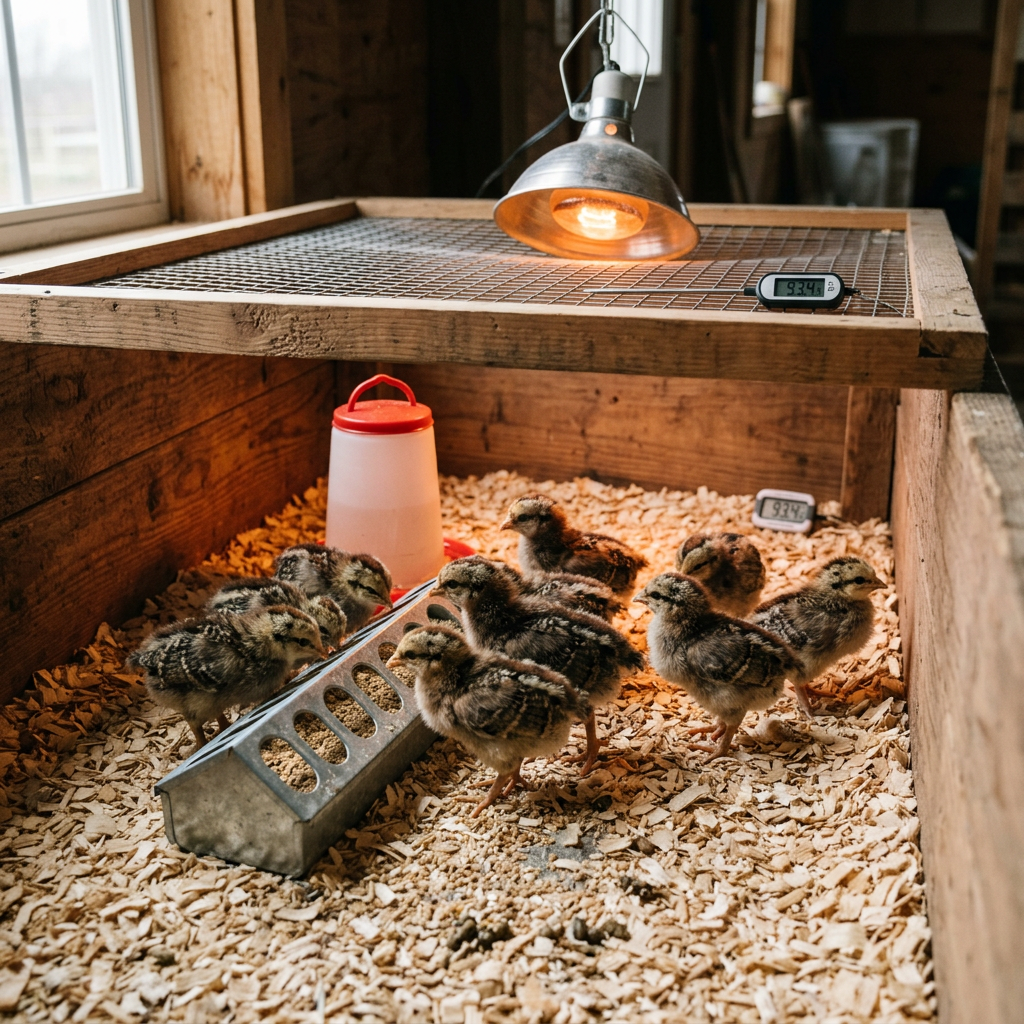
Setting Up the Perfect Brooder for Speckled Sussex Chicks
Your speckled sussex chicks need a safe, warm, and clean environment from day one. The brooder is their home for the first 6 to 8 weeks, so getting it right is critical.
Brooder Size and Materials
For a small batch of 5 to 10 chicks, a large plastic tub, a galvanized stock tank, or even a cardboard box lined with plastic works well. The general rule is to provide at least 0.5 square feet of space per chick for the first two weeks, increasing to 1 square foot by week 4 and 2 square feet by week 6. Speckled Sussex are active growers, so going bigger rather than smaller saves you from having to upgrade midway.
Bedding Options
Pine shavings are the gold standard for chick bedding, as recommended by Michigan State University Extension. They are absorbent, control odor, and are safe for chicks to peck at. Avoid cedar shavings, as the aromatic oils can irritate a chick’s sensitive respiratory system. Paper towels are excellent for the first 2 to 3 days they provide good traction for wobbly legs and make cleanup easy. After the first few days, switch to pine shavings. Do not use newspapers or slick surfaces, as they can cause leg splay issues.
Heat and Temperature Management
Temperature management is the single most important factor in keeping speckled sussex chicks healthy. Use a heat lamp or a brooder heating plate positioned at one end of the brooder so there is a warm zone and a cooler zone. This allows chicks to self-regulate by moving closer to or farther from the heat source.
This temperature schedule aligns with recommendations from the University of Wisconsin Extension chicken breed guide.
- Week 1: 95°F (35°C) at the heat source
- Week 2: 90°F (32°C)
- Week 3: 85°F (29°C)
- Week 4: 80°F (27°C)
- Week 5: 75°F (24°C)
- Week 6 onward: Gradually reduce to room temperature
Watch your speckled sussex chicks for behavioral cues. If they are huddled directly under the heat source, they are too cold. If they are panting, spreading out at the edges, or avoiding the heat source entirely, they are too hot. Happy chicks are evenly distributed throughout the brooder, chirping softly and moving around actively.
Lighting
Chicks need about 14 to 16 hours of light per day for the first week to help them find food and water. A standard brooder lamp provides both heat and light. After the first week, a natural day-night cycle of about 12 hours of light is sufficient. Consistent darkness at night helps them rest and reduces stress.
Feeding Your Speckled Sussex Chicks
Nutrition in the early weeks lays the foundation for healthy growth, strong bones, and future egg production.
Starter Feed
Feed your speckled sussex chicks a high-quality chick starter feed with 18% to 20% protein for the first 8 weeks. Choose a medicated starter if coccidiosis is a concern in your area, or a non-medicated starter if you prefer a natural approach. The feed should be offered in a chick-sized feeder that keeps food clean and accessible. Check and refill the feeder at least twice daily, and never let it run empty for more than a few hours.
Water
Clean, fresh water is non-negotiable. Use a chick-sized waterer (1-quart or 1-gallon) and place it slightly away from the feeder to prevent feed contamination. For the first day, add 1 teaspoon of sugar per quart of water to give speckled sussex chicks an energy boost after travel stress. Keep the water lukewarm (90°F to 100°F) for the first 24 to 48 hours cold water can chill a stressed chick. Change the water at least twice daily and clean the waterer thoroughly to prevent bacterial growth.
Grit and Treats
After the first week, offer chick-sized grit in a small separate dish to help them digest any treats or forage you provide. Speaking of treats go easy. Tiny amounts of scrambled egg (chopped fine), plain yogurt, or chick greens are fine after week 2, but treats should never exceed 5% of their diet. Stick mostly to starter feed to ensure balanced nutrition.
Health and Wellness for Speckled Sussex Chicks
Speckled sussex chicks are generally a hardy breed, but they are vulnerable to common chick ailments during their first few weeks. Awareness and prevention go a long way.
Common Health Issues
Pasty vent is the most common issue in young chicks. This occurs when droppings stick to the vent area, blocking elimination. Check each chick’s vent daily for the first week. If you see a pasty buildup, gently clean it with a warm, damp cotton ball. Left untreated, pasty vent can be fatal within 24 to 48 hours.
Coccidiosis is caused by a protozoan parasite and is a major risk for chicks raised on litter. Signs include bloody droppings, lethargy, ruffled feathers, and reduced appetite. Medicated starter feed containing amprolium can help prevent it. For more on coccidiosis prevention and treatment, refer to the CABI Compendium on Sussex fowl. If you suspect coccidiosis, consult a veterinarian promptly.
Leg issues such as splayed legs can occur if chicks are raised on slippery surfaces. Provide good traction with paper towels or pine shavings, and ensure proper nutrition with adequate niacin and vitamin E.
Vaccination
When you order speckled sussex chicks from a hatchery, they may offer Marek’s disease vaccination. Marek’s is a highly contagious viral disease that causes tumors and paralysis in chickens. Vaccination at day old is highly effective and strongly recommended, especially if you plan to keep your birds for several years.
Transitioning from Brooder to Coop
Around 6 to 8 weeks of age, your speckled sussex chicks will be fully feathered and ready to move to the outdoor coop. Hardening-off is a gradual process. On mild days, move the brooder into the coop for a few hours so they can acclimate to the temperature and sounds of their new environment. Over a week, increase the time spent in the coop until they are comfortable spending nights there.
For the first few weeks after moving, provide a supplemental heat source if nighttime temperatures dip below 60°F (15°C). A heat plate or a 100-watt bulb works well.
Coop Requirements for Speckled Sussex
Speckled Sussex are a large, heavy breed. Adult hens weigh 7 to 8 pounds, and roosters can reach 9 to 10 pounds. Your coop needs to accommodate their size:
- Space: At least 4 square feet per bird inside the coop and 10 square feet per bird in the run
- Roosting bars: 2 to 4 feet off the ground, at least 2 inches wide for comfortable footing
- Nesting boxes: One box per 3 to 4 hens, roughly 12 x 12 x 12 inches
- Ventilation: Good airflow without drafts Speckled Sussex are cold-hardy but still need dry, well-ventilated housing
Their dense feathering and heavy build make them excellent in cold climates, a trait noted by Poultry Hub Australia. They tolerate winter better than many other breeds, though they need shade and fresh water in hot summer months.
For more on their housing needs and full care requirements, visit the Speckled Sussex Chickens breed guide.
Egg Production Timeline
One of the most rewarding milestones is the first egg. Speckled sussex chicks grow into productive layers that reward your patience handsomely.
When Do They Start Laying?
Speckled Sussex hens typically begin laying at 20 to 24 weeks of age, slightly later than production hybrids like Leghorns but right on schedule for heritage breeds. Some individuals may take up to 26 weeks, especially if they hatch later in the year and experience shorter daylight hours during their maturity window.
How Many Eggs?
A healthy Speckled Sussex hen lays approximately 4 to 5 large brown eggs per week, totaling 200 to 260 eggs per year. Their egg production is notably consistent through winter, making them one of the better cold-weather layers among heritage breeds. Egg size increases with age. Pullet eggs are smaller but full-size by the second laying season.
For a complete breakdown of what to expect, check out the Speckled Sussex egg production guide.
Temperament and Integrating with Your Flock
Speckled Sussex are widely regarded as one of the friendliest chicken breeds. They are curious, docile, and enjoy following their keepers around the yard. They rank low on the pecking order in a mixed flock not because they are weak, but because they are genuinely non-aggressive. If you are adding them to an existing flock, expect some establishing of hierarchy, but these birds rarely cause trouble.
Speckled sussex chicks raised with gentle handling grow into remarkably tame adults. They are excellent with children and make wonderful “lap chickens. ” Roosters, while protective of their hens, are typically not aggressive toward humans, especially if handled regularly from a young age.
Availability and Where to Find Speckled Sussex Chicks
Due to their popularity, speckled sussex chicks are widely available from hatcheries and breeders, though availability can fluctuate with the season. Spring is the primary hatching season, and many reputable hatcheries sell out early. Ordering in January or February for spring delivery is recommended.
Whether you are looking to start a new flock or add to an existing one, you can find quality speckled sussex chicks and adult birds at Layers Farm. Browse available Speckled Sussex Chickens for Sale and Sussex Rooster for Sale to complete your flock.
Breed History and Conservation Status
The Speckled Sussex dates back to the Roman era in Britain, though the modern standardized breed was developed in the early 1900s. The breed was refined in East Sussex and Kent, England, and was first exported to the United States in the early 20th century. It was admitted to the American Poultry Association’s Standard of Perfection in 1914.
While not critically endangered today, the Speckled Sussex is listed on the Livestock Conservancy’s priority list as a breed that needs monitoring. Conservation efforts by small flock owners and breeders have helped stabilize its population, but heritage breeds like this one rely on backyard keepers to maintain genetic diversity.
Pros and Cons of Raising Speckled Sussex Chicks
Pros
- Excellent temperament — friendly, calm, and great with families
- Dual-purpose value — good eggs and quality meat
- Cold-hardy — dense feathers make them winter survivors
- Good foragers — thrive in free-range or pasture settings
- Consistent layers — continue laying through winter when many breeds slow down
- Stunning appearance — beautiful speckled plumage is a showstopper
Cons
- Not the earliest layers—can take up to 24 to 26 weeks for first eggs
- Heavy eaters — larger body size means more feed consumption
- Not flighty—they are too heavy to fly well, which is actually a pro for containment
- Breeding true requires selection—not all chicks will develop ideal speckling
Common Questions About Speckled Sussex Chicks
How can I tell if my Speckled Sussex chick is a pullet or cockerel?
Sexing young speckled sussex chicks is tricky since the breed is not auto-sexing. However, by 6 to 8 weeks, cockerels typically develop larger combs and wattles, grow taller legs, and show more aggressive feather growth in the hackle and saddle areas. Pullets tend to be rounder and more evenly feathered.
How long do Speckled Sussex chickens live?
With proper care, Speckled Sussex can live 8 to 10 years, with peak egg production in the first 2 to 3 years. They continue laying at reduced rates for several more years.
Do Speckled Sussexes go broody?
Yes, Speckled Sussex hens have a moderate tendency to go broody. They make excellent mothers and will diligently hatch and raise chicks if allowed.
Can Speckled Sussex handle hot weather?
Their dense feathering makes them more suited to cool climates. In hot weather, provide ample shade, cold fresh water, and good ventilation. A shallow dust bath area helps them cool down naturally.
Final Thoughts on speckled sussex chicks
Raising speckled sussex chicks is a deeply rewarding experience. From the moment those striped, fluffy babies arrive in your brooder to the day you collect your first warm brown egg from a fully speckled hen, every stage of their development is a joy to witness. Their gentle nature, reliable productivity, and stunning looks make them a standout choice for anyone building a backyard flock.
Whether you are raising them for eggs, for show, or simply as feathered companions, the Speckled Sussex delivers on all fronts. With proper care, attention, and a little patience, your speckled sussex chicks will grow into the pride of your coop and possibly the start of a lifelong passion for heritage poultry keeping.
Ready to welcome Speckled Sussex chicks to your home? Check our selection of Speckled Sussex Chickens for Sale and complete your setup with a Speckled Sussex Rooster or Sussex Rooster for Sale to start your own breeding program.